


















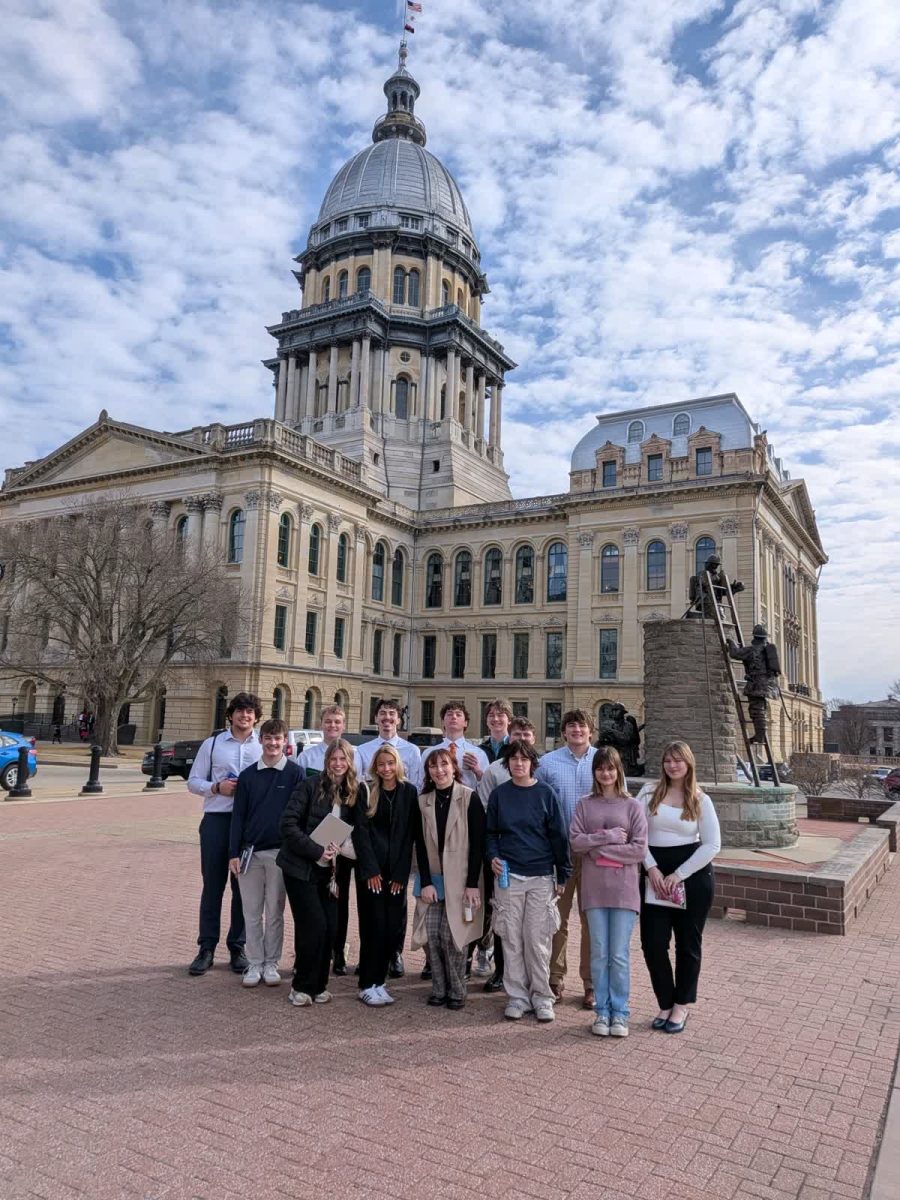
Taken together, the security lines, the quiet formality of the chambers, the slow grind of the bill-making process, and the noisy democracy of the petition tables in the halls offered more than just a field trip. For a few hours, the Illinois State Capitol functioned as a kind of open newsroom: lawmakers working under the dome, advocates testing the limits of public space, and visitors watching how public power is negotiated in real time. It was a reminder that state government is not only something that happens to citizens from afar, but something that unfolds in front of anyone willing to show up, pass through the metal detectors, and pay attention.
A Journalist’s Day Inside the Capitol
Our visit to the Illinois State Capitol in Springfield began with planning and preparation before we even arrived at the building. Before the trip, we checked the schedule online to see when legislative sessions would be happening. This helped us plan our visit around a time when lawmakers would actually be meeting. Our group also looked into the legislative process to understand what we would be seeing. Once we arrived in Springfield, we gathered outside the Capitol and were told what we would be doing for the day and where we could visit.
The first step was going through security. Just like in many government buildings, everyone had to pass through a security checkpoint. Officers checked our bags, and we walked through a metal detector before being allowed further inside the building. These security measures help protect the lawmakers and staff who work there every day. After clearing security,y we entered the main interior area of the Capitol, where we could see the large dome above us and several hallways leading to different parts of the building.
After getting inside, we began walking through the Capitol to observe where lawmakers work and meet. We passed through hallways that led to offices for legislators and staffmembers, and we learned more about how the state government operates. Eventually, we were directed towards the area where the legislative chambers are located. From there, we went up to the public galleries where we observed sessions in the Illinois Senate and the Illinois House of Representatives. From above the chamber floor, we watched lawmakers do their thing.
During our time observing the session, we followed the rules required when in the gallery. Everyone stayed pretty quiet, kept their phones silent, and paid attention to what was happening below. The gallery seating allowed us to clearly observe the chamber’s layout, including where the presiding officer sits, where members speak from, and how the overall process of discussion and voting takes place during a session.
How a Bill Becomes a Law
In the United States, a bill must pass through several stages in Congress before it can become a law. Congress is made up of two chambers: the United States House of Representatives and the United States Senate. Lawmaking usually begins when a member of either chamber introduces a bill, called a “sponsor”. The bill is then formally presented and assigned a number (for example, H.R. in the House or S. in the Senate). Once introduced, the bill is sent to a relevant committee where members review and discuss the proposal.
Committees play a critical role in shaping legislation. Each committee focuses on a specific policy area, such as agriculture, finance, or defense. Committee members may hold hearings where experts, government officials, and citizens provide testimony. After studying the bill, the committee may revise it through a process known as “markup.” If the committee approves the bill, it is sent to the full chamber- either the House or Senate- for debate and a vote. Many bills do not make it past this stage, which is why committee approval is considered a major hurdle.
When a bill reaches the floor of the House or Senate, lawmakers debate its merits and may propose amendments. In the House, debate is usually limited and structured by rules set by the Rules Committee. In the Senate, debate is typically more open and can be extended, sometimes leading to a filibuster. Eventually, the chamber votes in favor, and the bill passes. If a majority of members vote in favor, the bill passes that chamber and moves to the other chamber of Congress, where it goes through a similar committee review, debate, and voting process.
If both the House and Senate pass the same version of the bill, it is sent to the President of the United States. If the two chambers pass different versions, a conference committee made up of members from both chambers works to reconcile the differences. Once a final version is approved by both chambers, the president can sign the bill into law or veto it. If vetoed, Congress can still enact the bill if two-thirds of both the House and Senate vote to override the veto, completing the legislative process
What to Expect When You Walk In
Walking up to the Illinois State Capitol, manicured grounds greet visitors, the dome rising above a bustle of daily government business. But before they reach the doors, a distinct scene unfolds in the hallways just beyond the entrances: clusters of booths, tables, and people holding clipboards, flyers, and petitions. This is the unofficial arena of Illinois’s democracy.
On any given day, these advocates, sometimes volunteers, sometimes professionals, stand ready to educate passersby about proposed legislation. Some offer quick explanations about bills moving through the General Assembly, others encourage civic engagement by urging signatures for ballot initiatives, and many explain how direct democracy gives citizens a voice beyond simply voting for representatives.
The legal framework governing these activities is a patchwork of state laws. Illinois allows ballot initiatives and referendums, but with strict signature requirements and rules about where petitioners can stand or set up shop. Free speech protections in public spaces, especially government buildings, give these advocates the right to make their case, but also draw boundaries to keep the peace and ensure safety.
Reactions from the public are mixed. Some see these petitioners as vital participants in democracy, connecting citizens with the legislative process and amplifying underrepresented issues. Others, however, find them persistent or even intrusive, especially when approached repeatedly on their way to work or a legislative meeting. Regardless of opinion, their presence is a barometer for the political energy swirling around particular causes in the state.
Ultimately, these hallway advocates matter because they serve as a bridge between lawmakers and everyday citizens. They highlight issues that may not get traction inside the legislative chambers and represent participatory democracy in its purest, most visible form. In the corridors of the Illinois State Capitol, the work of these petitioners underscores the ongoing, often messy, but essential business of self-government.